

















International Dark Sky Places Program Advocacy 2024
A review of the 2024 annual reports
Across the world, certified International Dark Sky Places (IDSP) serve as shining examples of how communities and protected areas can safeguard our natural night sky. By raising awareness about the importance of dark skies and promoting responsible lighting, each Place demonstrates what thoughtful environmental stewardship can accomplish.
Every year, Places participate in creative and diverse outreach and education activities tailored to their local needs, capacities, and resources. These initiatives go beyond simply stargazing—they incorporate topics like wildlife conservation, energy efficiency, public safety, and human well-being, showcasing the wide-ranging benefits of protecting the night.
In 2024, the IDSP program achieved an exciting milestone with nearly 30 new certifications, bringing the total closer to 250 worldwide. This growth highlights the increasing global momentum to combat light pollution. The annual reports submitted by certified Places reveal ongoing dedication to making a difference, whether through lighting retrofits, community programs, or habitat preservation.
Despite the rising threat of light pollution, there is strong reason for optimism. Each new Place adds its voice to a global network committed to defending the night. Their efforts are inspiring—and multiplying.
You can find each certified Place’s annual report on its respective webpage. While one blog post cannot cover all their work, we are proud to highlight a few efforts that showcase the passion, creativity, and perseverance of dark sky advocates worldwide.
Follow the links below to learn more about these sites and discover creative ways to celebrate, support, and protect our dark skies.
Interpretation
Presentation of information to the public in creative and engaging ways:
Yeongyang Firefly Eco Park – Yeongyang advocates have creatively blended culture and astronomy to engage the public in dark sky conservation. Jazz concerts under the stars and the rise of local student bands have made jazz a growing cultural symbol. At the same time, immersive experiences like films, 4D exhibits, and interactive space adventures highlight the importance of dark skies. Yeongyang’s approach shows how communities can promote dark sky awareness through engaging, locally rooted programming. Annual report.
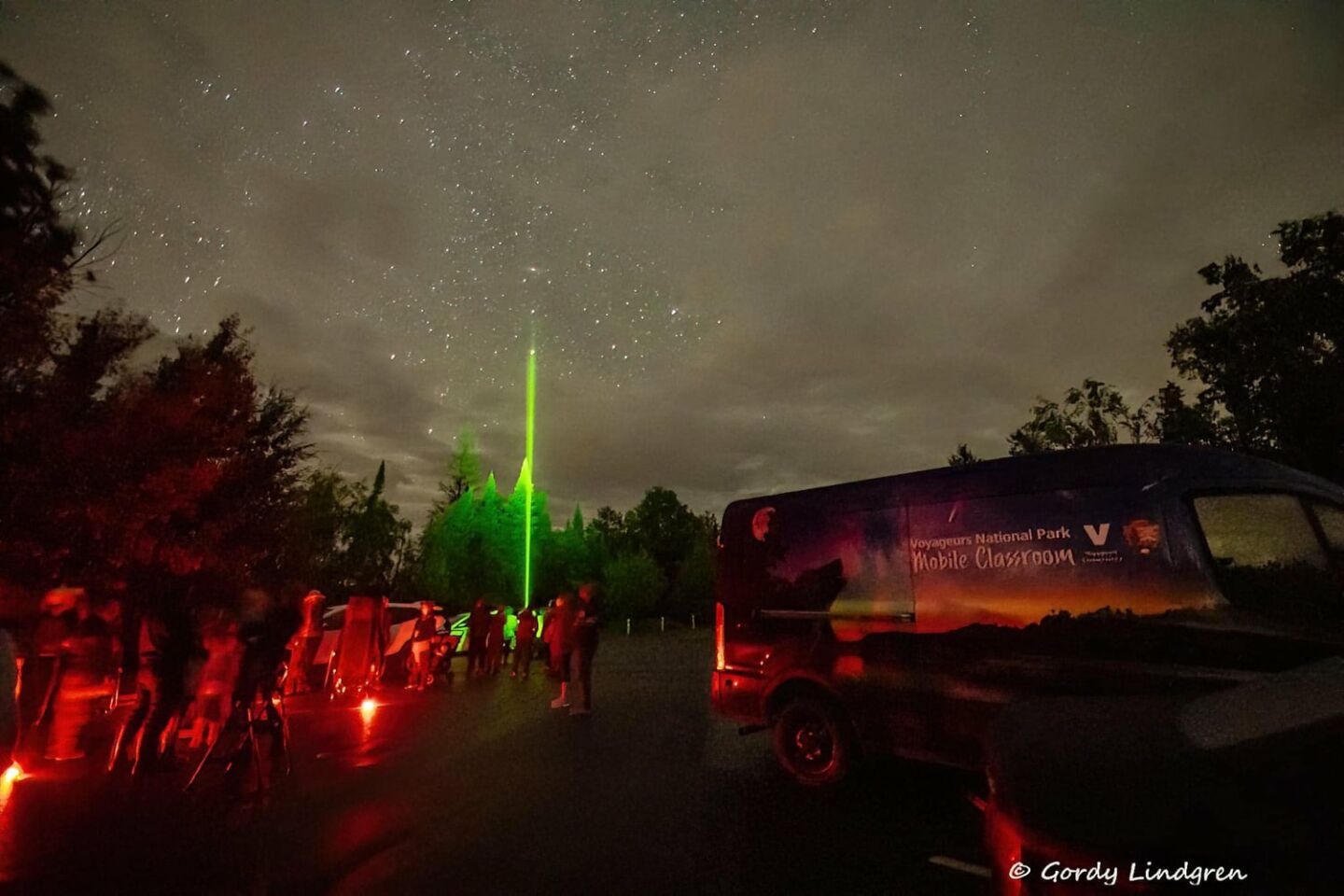
Voyageurs National Park – Voyageurs continues to offer culturally rich dark sky programming that weaves together mythology, indigenous stories, and constellation lore. Programs like Stargazing Boat Cruises and Northern Lights viewings inspire widespread artistic expression. In 2024, Artist-in-Residence Marko Bajzer composed an orchestral symphony based on his experience in the park. Looking ahead, events like the Star Party and Boreal Stargazing Week will further use celestial events to foster art, storytelling, and community engagement. Annual report.
Parque natural regional de Millevaches en Limousin – Advocates of IDSR Millevaches have developed a variety of accessible resources to engage the public in dark sky awareness. Informational materials are available by email and at the “Maison du Parc,” alongside interpretive signs and free sky-viewing tools at observation sites. An exhibition and take-home booklets for adults and children help extend learning beyond the park. Additionally, a sensory-based educational kit supports night-themed programming, offering interactive and thematic ways to explore the night sky and its importance. These efforts reflect a well-rounded, inclusive approach to public engagement. Annual report.
Outreach, education, and training
Finding common ground through learning:
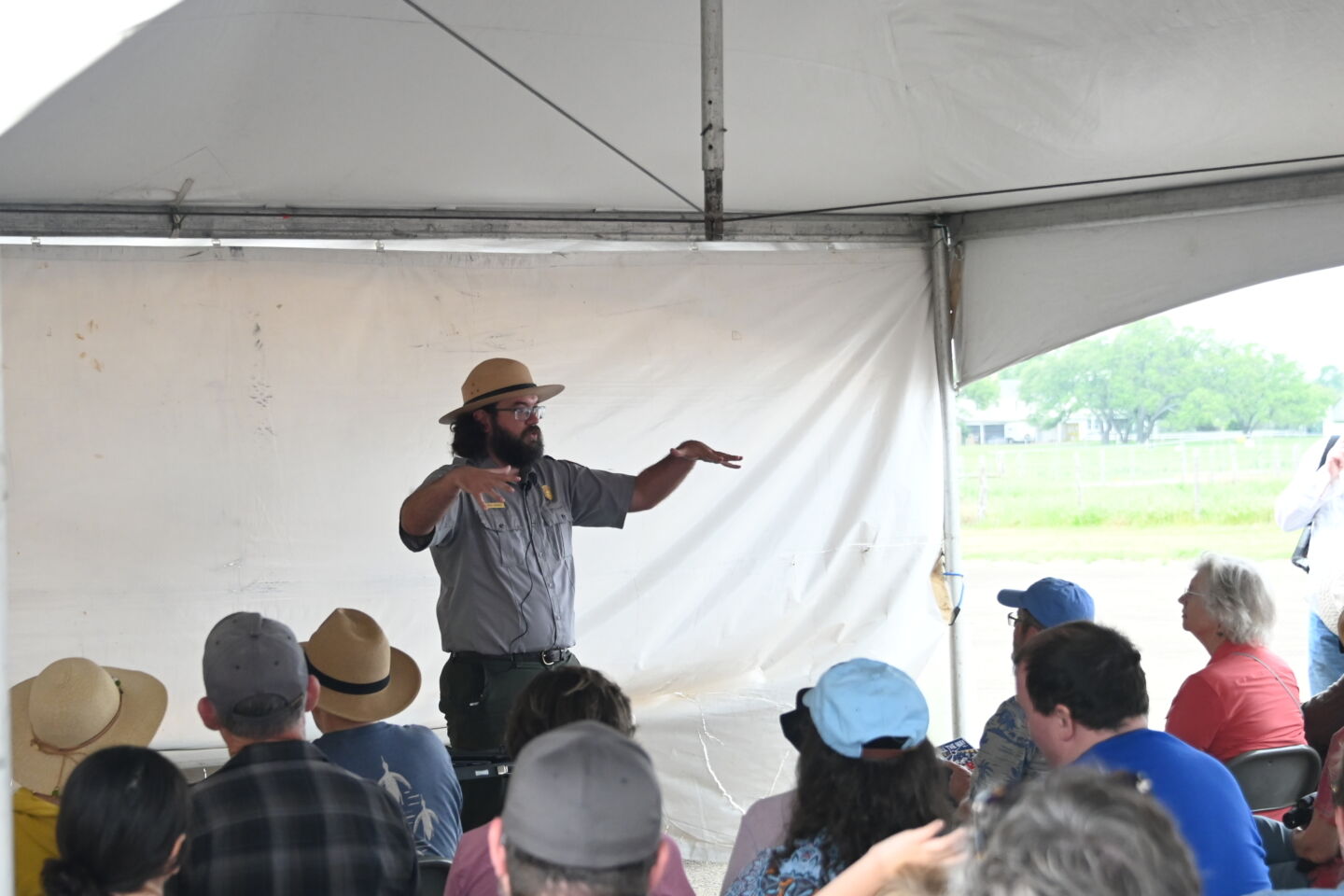
Lyndon B. Johnson National Historic Park – The park refreshed its astronomy programming to engage broader audiences. In 2024, two astronomy interns helped build community connections, create off-site engagement, and develop night sky programs while training staff to deliver them efficiently. Partnerships with local groups like Blanco County Friends of the Night Sky and Hill Country Science Mill support diverse outreach. Events like Park After Dark and an April weekend for the Total Solar Eclipse attracted school groups, partners, and new visitors, enhancing dark sky education and experiences. Annual report.
Staunton River State Park – In June 2024, Staunton River State Park hosted Latinos Adventureros for a day of solar observing and evening sky viewing. This dynamic group brought new energy and connections to the park. Building such partnerships is a priority, and the park aims to expand programming to more diverse cultural groups in the future. Annual report.
Best lighting practices
Lighting retrofit projects enhance quality of life with quality lighting:
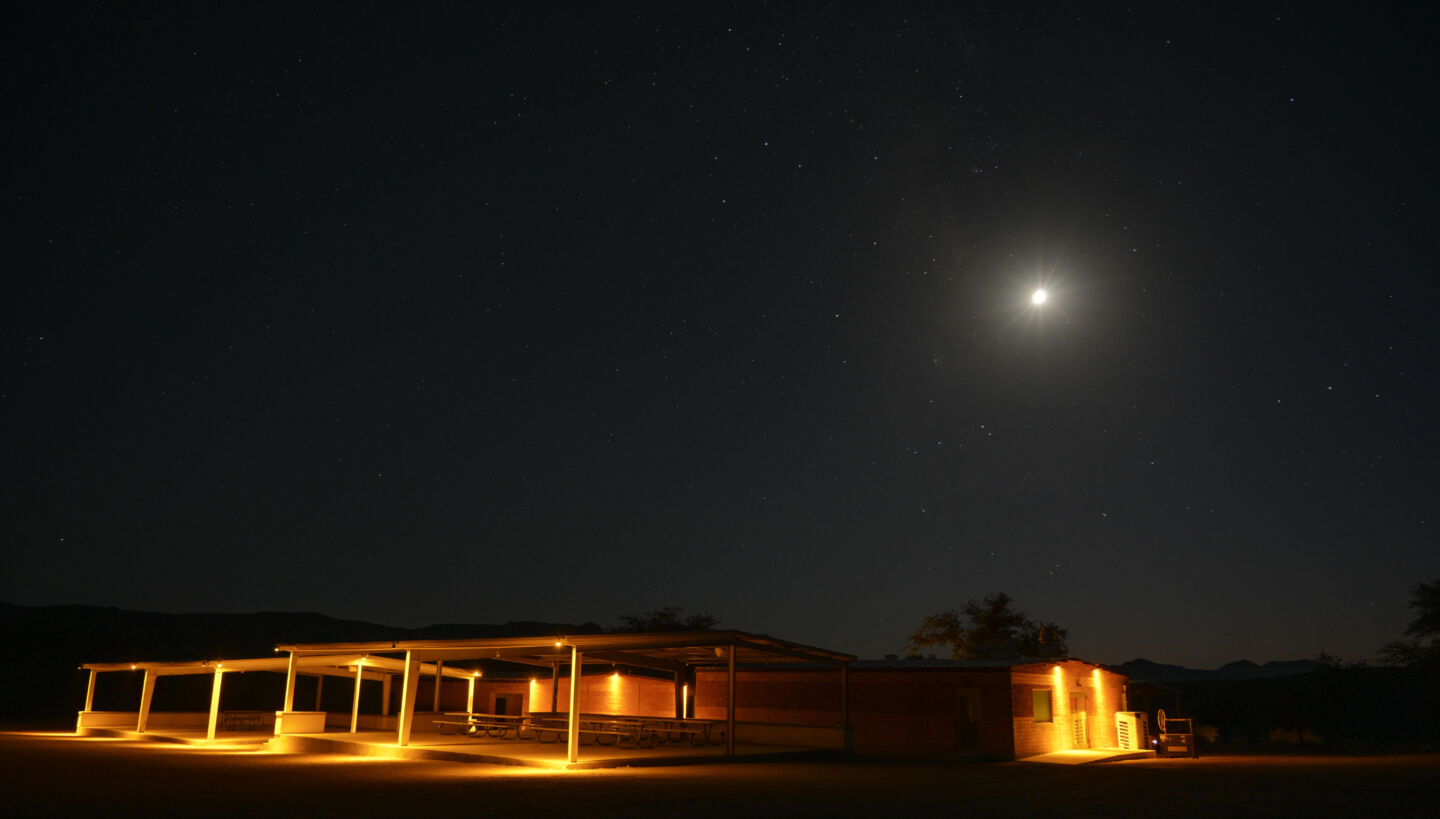
Death Valley National Park – Death Valley National Park staff continue collaborating with nearby communities, including Xanterra, which recently renovated its property and lowered gas station lighting to align with the Lighting Management Plan. Ongoing discussions aim to improve lighting further. Although Xanterra’s 340-acre land is a tiny fraction of the park, Death Valley is installing energy-efficient LED lights that meet National Park Service and Dark Sky standards, specifically 2200K color temperature, to minimize light pollution. Installation is planned to occur in 2025. Annual report.
Eifel National Park – Vogelsang International Place hosts annual evening events that require parking lot lighting, which is currently provided by mobile light poles that inadequately control light pollution. Inspired by the success of MUSCO luminaires used on nearby sports fields, plans are underway to install similar low-impact lighting for parking areas. Additionally, a demonstration route for low-impact path lighting is being developed with Astronomie-Werkstatt “Sterne ohne Grenzen” and e-regio, with implementation expected in Autumn 2025 pending funding.
Aging sports field lighting in surrounding communities prompted collaboration with the District Sports Association of Euskirchen to address light pollution concerns. An informational event showcased low-impact lighting solutions, leading to partnerships with energy provider e-regio and multiple sports field upgrades using MUSCO luminaires, balancing higher costs with improved energy efficiency and night sky protection. Annual report.
Bodim Moor Dark Sky Landscape – Cornwall is progressing with a large-scale streetlight upgrade and part-night switch-off program, aiming to convert approximately 36,000 of its 56,000 streetlights. Around 1,000–1,500 units are being updated monthly, primarily using Thorn’s Isaro Pro lanterns with a 3000K CCT and minimal tilt to reduce light pollution, chosen in part to support dark sky goals. The switch-off is implemented alongside installing a new central management system, prioritizing rural areas around Bodmin Moor, Pensilva, and St Tudy. Larger towns like Bodmin, Liskeard, and Wadebridge have also seen upgrades, with Launceston scheduled next. As of early November, over 10,000 lights have been switched to part-night operation. Annual report.
Greater Big Bend International Dark Sky Reserve – Public street lighting across the region remains largely consistent with 2023 efforts, which saw major upgrades in Alpine, Marfa, Fort Davis, and Presidio. In Jeff Davis County, the Texas Department of Transportation (TXDOT) installed 13 non-powered, non-compliant 4000K LED fixtures but has committed to not energizing them until compliant models are installed. A successful trial using 2200K LEDs near Balmorhea State Park has replaced four non-compliant highway lights. Similarly, 25 non-compliant LEDs at the I-10/I-20 junction in Reeves County have been replaced with 2200K models, now under evaluation for broader adoption. Additionally, numerous small businesses and major retailers, including Dollar General and Family Dollar, have upgraded or are planning to upgrade store lighting to meet dark sky standards by 2026. Annual report.
Public policy and community relations
Engagement to benefit everyone:
Florissant Fossil Beds National Monument – Florissant Fossil Beds National Monument (FLFO) strengthened its commitment to dark sky preservation by offering outreach programs and materials and partnering with the nearby Colorado Mountain Estates (CME) subdivision, located about three miles from the park’s center. Florissant worked directly with the CME Board of Directors to help establish light pollution policies for the Property Owners Association. These efforts successfully reduced light pollution from the subdivision, directly supporting FLFO’s International Dark Sky certification. This collaboration slightly increased the park’s sky quality measurements, reinforcing FLFO’s role as a community partner and a model for dark sky stewardship. Annual report.
Parc National du Mont-Tremblant – The park worked closely with surrounding municipalities and the local astronomy club to promote dark sky preservation, highlighting its environmental benefits and encouraging concrete action. These efforts led to widespread lighting upgrades, including the replacement of over 700 streetlights in Mont-Tremblant with 2200K amber LEDs, and similar actions in Saint-Donat, Labelle, Sainte-Agathe-des-Monts, and Rivière-Rouge. Several municipalities adopted new regulations limiting residential lighting and ensuring fixtures are directed downward. Some, like Saint-Donat and Domaine Saint-Bernard, are considering applying to the program. The park’s outreach also spurred formal commitments to lighting policy improvements and business incentives in Labelle. Regional support grew further through the park’s participation in major public events, including the Villages-Relais Congress, a local 150th anniversary, and a national nighttime environment conference hosted by Mont-Mégantic, where the park presented its leadership as Quebec’s first International Dark Sky Park. Annual report.
Aotea Great Barrier Island – Advocates continued the island-wide nighttime lighting survey to monitor compliance with certification guidelines and local planning regulations. Of approximately 500 buildings, only one public site remains non-compliant. Discussions are ongoing with the club and a lighting company in Auckland to explore retrofit options. Two private residences identified in 2023 as non-compliant have since corrected their lighting. Light management information is provided in planning applications for new construction, and further public education campaigns are planned. The island’s dark sky quality remains well protected due to its lack of grid power and remote location. Community engagement has also grown, with the formation of the Dark Sky Enthusiasts Group in 2023, which has hosted stargazing events and promoted night sky awareness. Annual report.
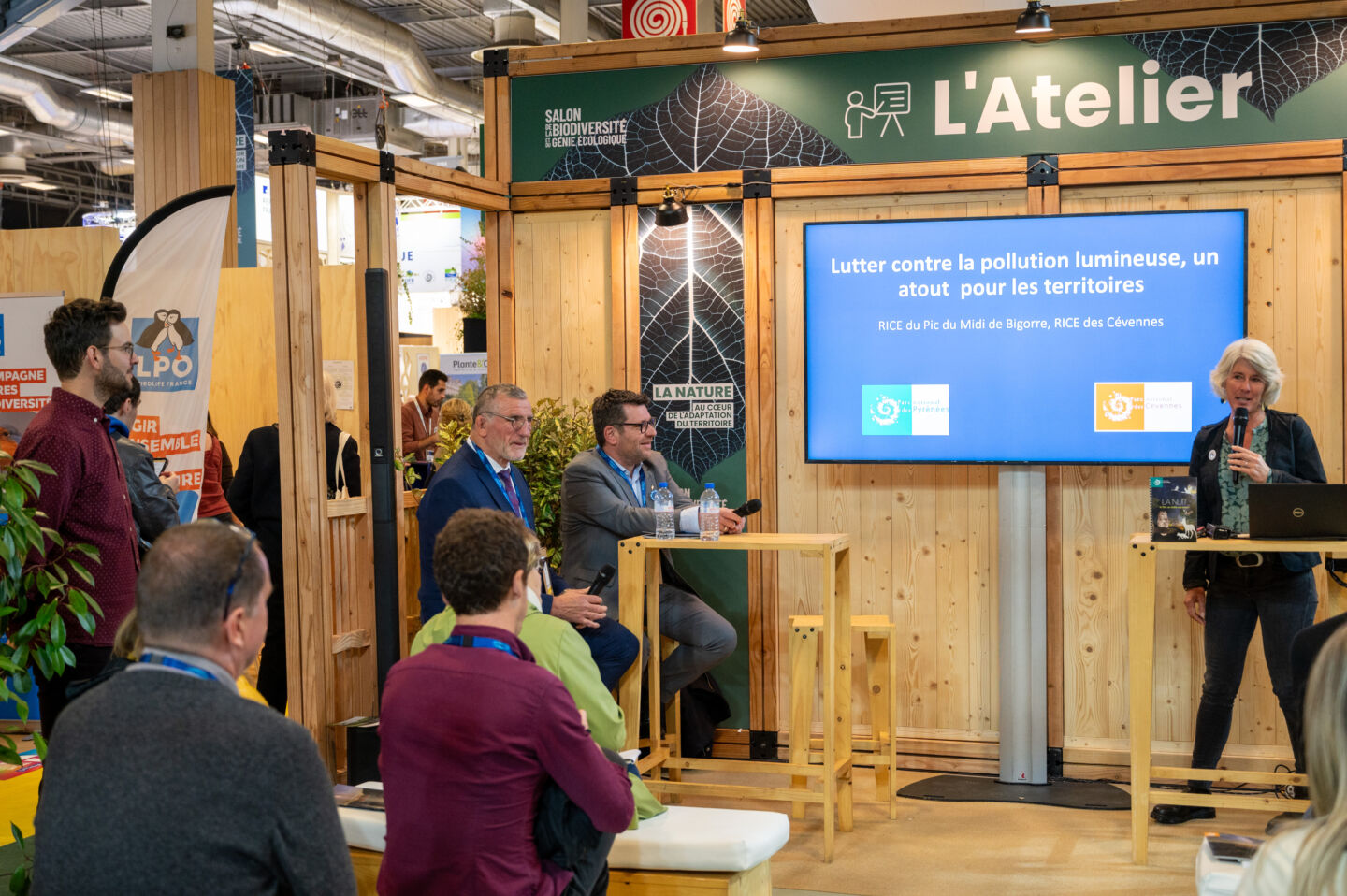
Cévennes National Park – The park launched a major regional initiative to address light pollution by uniting nearby cities—Montpellier, Nîmes, Alès, Millau, and Mende—alongside the Grands Causses Regional Nature Park and partner syndicates. An initial seminar in Nîmes focused on shared challenges and solutions related to lighting in sports facilities, biodiversity protection, and funding opportunities. Discussions led to the proposal of a joint charter, committing all parties to reduce light pollution by 50% by 2030, with efforts targeting private sectors, high-biodiversity areas, and significant infrastructure. Representing a population of over one million, this collaboration highlights the Cévennes Dark Sky Reserve’s growing influence and potential to drive dark sky progress across urban and regional landscapes. Annual report.
Night sky quality and science
Tracking change and gaining knowledge:
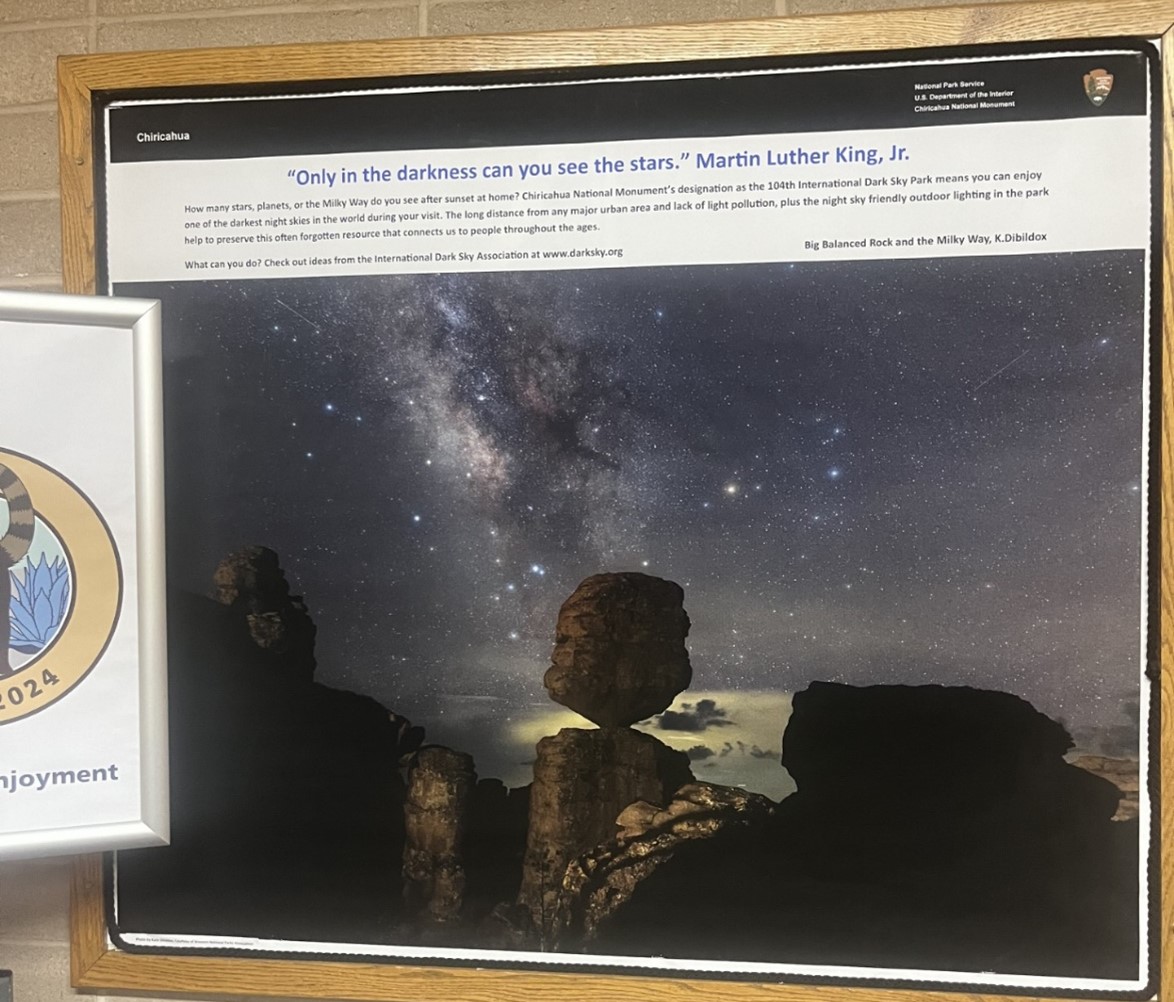
Chiricahua National Monument – the Resource Management (RM) division supported dark sky research by collaborating with the Southern Arizona DarkSky International Chapter chair, Emilio Falco to provide night sky quality and air quality monitoring data for Falco’s latest report, Analysis of SQM [sky quality meter] and Solar Flux Data for 4 Sites, which included Chiricahua National Monument. Resource Management also continued to fund the Desert Research Institute (DRI) to maintain its monitoring stations, including successfully repairing the Bonita Creek station. Desert Research Institute provides RM with weekly sky quality and weather data updates from Bonita Creek and Sugarloaf stations, supporting ongoing analysis and dark sky protection efforts. Annual report.
Parc du Mont Bellevue – The park’s outreach inspires interest in dark sky protection beyond its boundaries, with residents from nearby towns regularly attending events and seeking guidance to establish their own protected sky zones. In Granby, about 50 km from Sherbrooke, a citizen group works with park advocates to create a protected area. Similarly, in Shawinigan—180 km away—residents are actively working to reduce local light pollution. With support from the Cégep de Sherbrooke, citizens are using a LAN3 device to collect nighttime lighting data and generate light pollution maps. These maps will be essential for engaging local authorities and advancing community-led dark sky initiatives. Annual report.
Environment and Wildlife Protection
Protecting natural resources for all:
Eryri National Park (Snowdonia) – Through the ‘Sustainable Landscapes, Sustainable Places’ project, four major light pollution sources, including a training facility, a hotel, and a popular outdoor center, were retrofitted in ecologically sensitive areas like Capel Curig and Llyn Tegid. A retrofit of a large public car park in Betws Y Coed, near the most popular tourist town in the park, is also underway with support from the Local Nature Partnership Fund. Growing community interest has led to plans for broader retrofits, and discussions are ongoing with local highways to reduce street lighting from 4000K to 2700K to better protect night sky quality. Annual report.
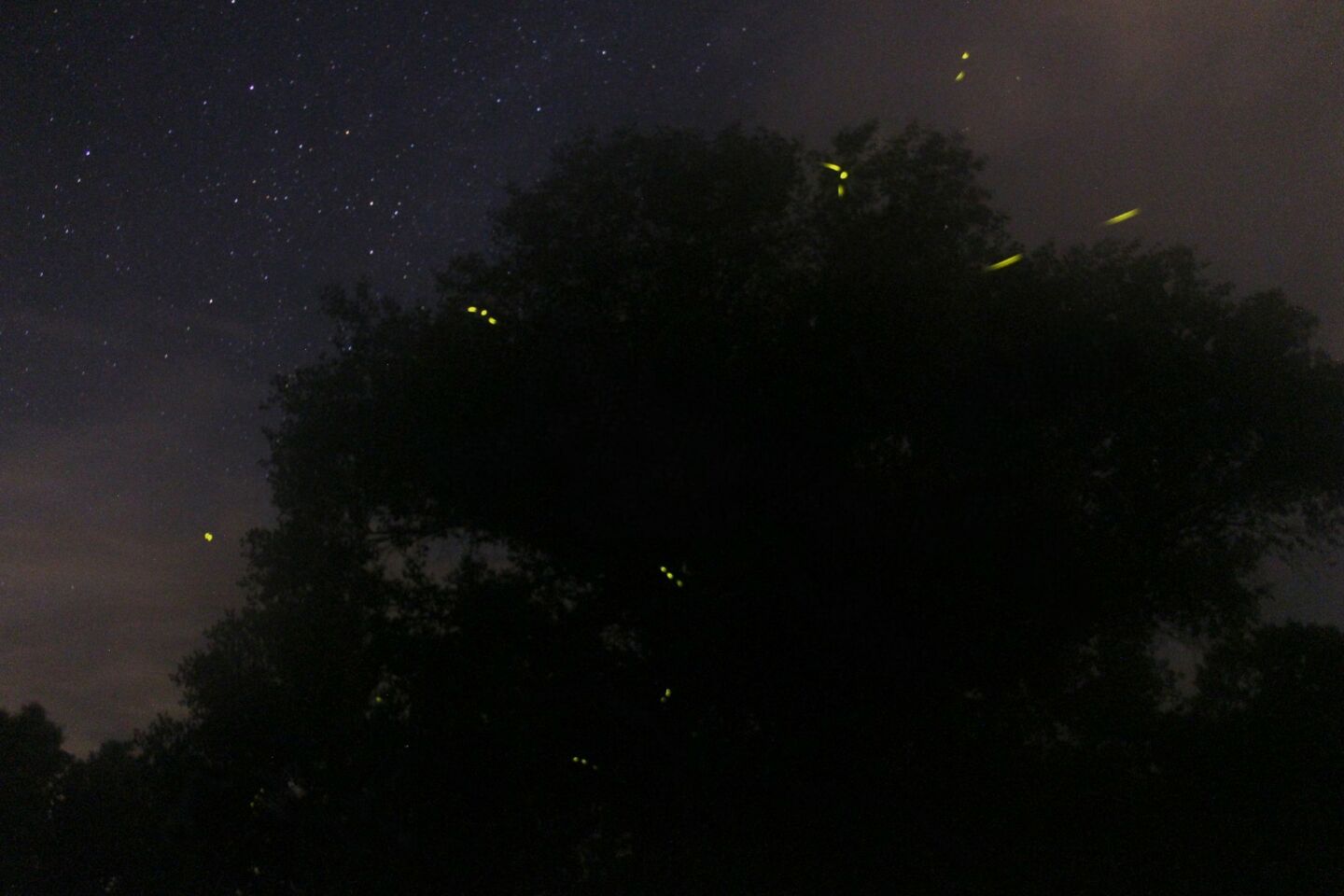
Tumacácori National Historical Park – The park hosted a special Indigenous community firefly night to share the firefly experience, exchange cultural knowledge, and provide information on night skies. The park’s natural resource staff is conducting ongoing research on Photinus knulli fireflies, focusing on flash patterns and population density. Ambient light levels are being monitored in areas where the fireflies occur.
Dark Sky Park certification plays a vital role in protecting the park’s skies for migrating birds, rare firefly species, and other wildlife, while also supporting cultural interpretation related to Indigenous Peoples and Father E. Kino, the mission’s founder and a noted astronomer. Annual report.
Ynys Enlli (Bardsey Island) – The Bardsey Island Trust is currently finalizing its new Nature Conservation Management Plan, which guides the management of all features on Enlli. This plan was created in collaboration with all key stakeholders and was ratified by Natural Resources Wales. The Bardsey Bird and Field Observatory conducts a range of monitoring and research programs on the island, including monitoring moths and Manx Shearwaters, both of which are key species affected by light pollution. Annual report.
Art and culture
Inspiration through exploration, creativity, and heritage:
OM Dark Sky Park & Observatory – The Stars & Stones programs at Davagh Forest highlight the connection between history, mythology, and astronomy through guided tours of Neolithic sites like the Beaghmore Stone Circles and the OM Solar Search walkway linking the OM Observatory to Beaghmore. The site hosts exhibitions, astrotourism, and nature events that attract photographers and stargazers. It also features a second stone circle for events such as Samhain and bat walks, as well as the Three Giant Sperrin Sculpture Trail, connecting it to other mountains and enhancing its cultural and astronomical importance. Artistic and educational initiatives, including TV features and toddler art programs, are anchored by the Ceoldán sculpture depicting a figure gazing at the Pleiades, symbolizing the site’s heritage and night sky focus. Annual report.
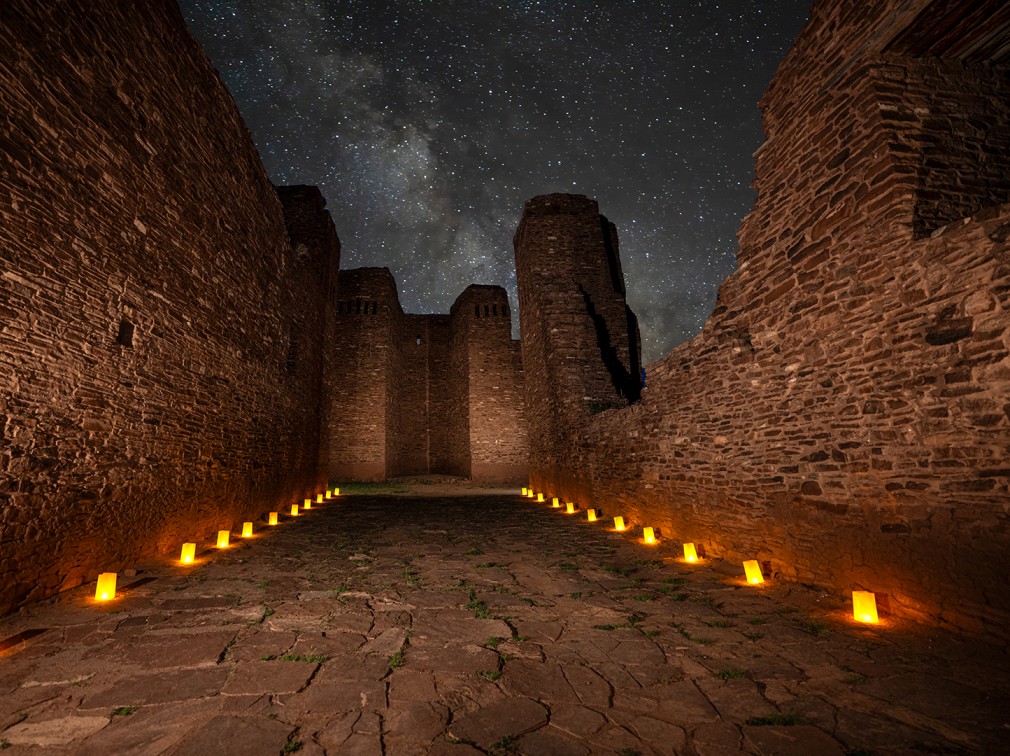
Salinas Pueblo Missions National Monument – Public programs seamlessly blend art and culture with astronomy. Each event begins with a ranger-led sunset hike exploring the Ancestral Pueblos and Spanish Missions, highlighting their astronomical significance, such as petroglyphs depicting stars and the sun, and mission constructions aligned with celestial directions to maximize winter solstice light. Following the hike, experts from local museums discuss astronomical events, and attendees can participate in telescope viewing or a dark sky photography workshop, which teaches how to capture night sky images, even with cellphones. Participants can print their photos on-site and take them home, with images uploaded to the park’s website for easy access. Annual report.
Headlands – The park partnered with the Mackinaw Area Arts Council for the 2024 “Under A Dark Sky” Art Contest, which received 55 submissions. The top three entries will be displayed in downtown Mackinaw City to showcase the region’s stunning dark skies. It also collaborated with Good Hart Artist Residency and Little Traverse Conservancy to present a sensory “Soundscapes of the Night Sky” program featuring their Artist in Residence, cellist Susan Mayo. Annual report.
Pisgah Astronomical Research Institute – The Institute offers culturally rich and educational programming that connects visitors to the night sky through diverse perspectives. The Stars of My People planetarium show highlights cultural interpretations of the stars, while another program explores how ancient civilizations used the night sky for navigation. Visiting schools can also participate in hands-on, arts-based activities such as paper marbling to paint nebulae, designing stellar spectra, and crafting constellation projection cards, blending science and creativity in an engaging learning experience. Annual report.
Bannau Brycheiniog National Park (Brecon Beacons) – As part of the Dark Sky Festival, award-winning storyteller Daniel Morden captivated audiences with traditional tales of the sun, moon, and stars, highlighting the enduring power of ancient sky lore. The festival also featured a sky-themed performance by the Ukulele Band and three popular planetarium shows titled Myths & Legends in the Sky. Complementing these events, Trig Point Adventure led guided hikes at dusk, weaving together the myths and cultural heritage of Bannau Brycheiniog with the surrounding landscape, enriching visitors’ connection to place and sky. Annual report.
Honorable mentions
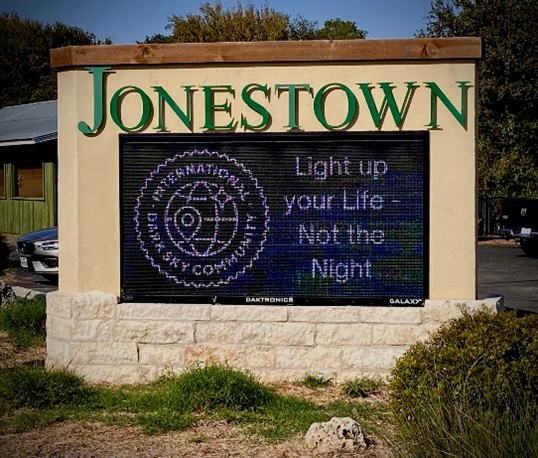
Jonestown, Texas – Night sky quality data shows slight improvement compared to 2022 and 2023, likely due to increased data collection from new meters, implementation of a dark-sky-friendly lighting ordinance, citywide lighting upgrades, replacement of streetlights with dark-sky-approved fixtures, stronger enforcement, and growing community awareness. They have also made notable progress, particularly around City Hall, where a timer shuts off the marquee display at 11:00 p.m., and outdated floodlights replaced with downlit, dark-sky-compliant fixtures. Similar upgrades have been made at Veterans Park, Jones Brothers Park, Fireman’s Park, and other city facilities. Two new residential structures were required to replace non-compliant lighting after inspection. Additionally, the city is working with a restaurant and a liquor store on exterior lighting retrofits, pending grant funding from the Hill Country Alliance. Annual report.
Springdale, Utah – The town inspected all streetlights to ensure the light shields are installed and positioned properly. Several shields had become rotated, which caused the light to be misdirected. These issues were corrected. The town also adjusted the light controls at the town office building to ensure lighting is only active when needed. Additionally, the town inspected every property in the community for compliance with the outdoor lighting ordinance. They prepared notices specific to each property, detailing areas of non-compliance and suggesting ways to bring the lighting into compliance. Annual report.